































AI Undress Ethics Continue Now

AI Girls: Best Complimentary Apps, Realistic Chat, and Safety Tips 2026
Here’s the straightforward guide to the “AI companions” landscape: what is actually zero-cost, how realistic conversation has progressed, and how to keep safe while navigating AI-powered undress apps, internet-based nude generators, and NSFW AI platforms. You’ll get an insightful pragmatic view at the market, quality metrics, and a ethics-focused safety framework you can implement immediately.
The phrase “AI companions” includes three distinct product classifications that often get conflated: AI-powered chat partners that mimic a girlfriend persona, adult image creators that generate bodies, and automated undress apps that try clothing stripping on genuine photos. All category presents different costs, quality ceilings, and danger profiles, and conflating them incorrectly is when most individuals get burned.
Defining “AI girls” in 2026
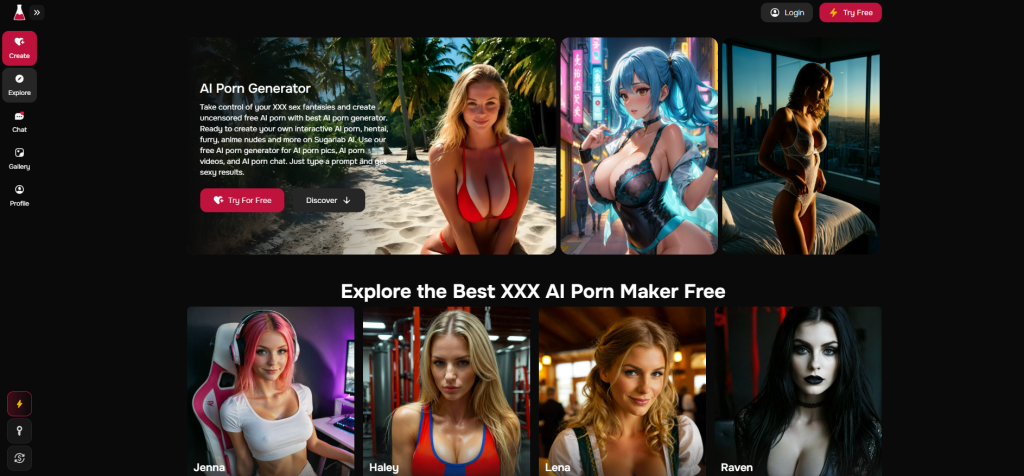
AI girls today fall into multiple clear classifications: companion chat apps, mature image creators, and outfit removal applications. Companion chat focuses on personality, retention, and speech; image generators target for lifelike nude generation; clothing removal apps seek to estimate bodies below clothes.
Companion chat platforms are the minimally legally dangerous because they generate virtual personalities and synthetic, synthetic content, often restricted by explicit policies and platform rules. Adult image generators can be safer if used with entirely synthetic descriptions or model personas, but they still raise platform guideline and information handling issues. Undress or “nude generation”-style tools are extremely riskiest category because they can be misused for non-consensual deepfake n8ked undress material, and many jurisdictions now treat that as a criminal offense. Clarifying your purpose clearly—interactive chat, synthetic fantasy content, or quality tests—decides which path is suitable and how much protection friction you should accept.
Market map and major players
The industry splits by purpose and by the way the results are produced. Services like these tools, DrawNudes, different services, AINudez, multiple tools, and related services are promoted as automated nude creators, internet nude tools, or AI undress utilities; their selling points tend to center around quality, efficiency, cost per image, and confidentiality promises. Companion chat platforms, by contrast, focus on conversational depth, response time, memory, and audio quality rather than concerning visual content.
Given that adult artificial intelligence tools are unpredictable, evaluate vendors by available documentation, rather than their marketing. For the minimum, scan for an unambiguous explicit authorization policy that prohibits non-consensual or youth content, an explicit clear information retention framework, some way to remove uploads and generations, and transparent pricing for tokens, memberships, or platform use. If an clothing removal app emphasizes watermark elimination, “zero logs,” or “designed to bypass safety filters,” view that as a danger flag: responsible providers won’t encourage non-consensual misuse or rule evasion. Always verify in-platform safety mechanisms before users upload anything that may identify any real person.
What AI virtual partner apps are actually free?
Many “free” choices are partially free: users will get a limited amount of generations or communications, promotional materials, markings, or throttled speed until you subscribe. Some truly no-cost experience generally means inferior resolution, queue delays, or strict guardrails.
Expect companion communication apps to include a small daily allocation of messages or tokens, with explicit toggles commonly locked behind paid subscriptions. Adult content generators usually include a few of lower resolution credits; premium tiers enable higher quality, speedier queues, personal galleries, and specialized model slots. Undress apps rarely continue free for much time because computational costs are substantial; they frequently shift to individual credits. If one want zero-cost experimentation, try on-device, open-source models for communication and non-explicit image testing, but avoid sideloaded “apparel removal” binaries from untrusted sources—these are a typical malware vector.
Comparison table: choosing the correct category
Pick your application class by aligning your intent with the risk users are willing to accept and the consent you can get. Our table below outlines what features you usually get, the costs it requires, and how the risks are.
| Type | Typical pricing approach | Content the no-cost tier includes | Key risks | Best for | Authorization feasibility | Privacy exposure |
|---|---|---|---|---|---|---|
| Chat chat (“AI girlfriend”) | Tiered messages; monthly subs; premium voice | Restricted daily interactions; standard voice; explicit features often restricted | Revealing personal details; parasocial dependency | Role roleplay, romantic simulation | Excellent (virtual personas, zero real persons) | Moderate (chat logs; review retention) |
| NSFW image synthesizers | Tokens for generations; upgraded tiers for quality/private | Lower resolution trial tokens; branding; wait limits | Rule violations; compromised galleries if without private | Artificial NSFW content, stylized bodies | Good if completely synthetic; obtain explicit consent if using references | Medium-High (uploads, inputs, outputs stored) |
| Undress / “Garment Removal Utility” | Pay-per-use credits; limited legit complimentary tiers | Rare single-use trials; prominent watermarks | Non-consensual deepfake liability; threats in shady apps | Scientific curiosity in controlled, consented tests | Poor unless every subjects specifically consent and have been verified adults | Significant (face images uploaded; major privacy concerns) |
How much realistic is communication with digital girls presently?
State-of-the-art companion chat is surprisingly convincing when providers combine advanced LLMs, temporary memory storage, and character grounding with natural TTS and low latency. The limitation shows with pressure: extended conversations drift, guidelines wobble, and feeling continuity fails if memory is shallow or safety measures are unreliable.
Realism hinges upon four key elements: latency under two seconds to maintain turn-taking smooth; persona cards with stable backstories and limits; audio models that include timbre, rhythm, and breathing cues; and recall policies that preserve important information without storing everything you say. For ensuring safer experiences, explicitly set boundaries in initial first communications, don’t sharing identifying information, and favor providers that enable on-device or complete encrypted communication where available. Should a chat tool promotes itself as a fully “uncensored girlfriend” but cannot show ways it safeguards your chat history or maintains consent standards, step on.
Assessing “realistic nude” graphic quality
Quality in any realistic adult generator is not so much about hype and more about physical accuracy, lighting, and consistency across positions. The best AI-powered systems handle dermal microtexture, body articulation, finger and foot fidelity, and fabric-to-skin transitions without seam artifacts.
Undress pipelines frequently to break on obstacles like crossed arms, multiple clothing, straps, or locks—watch for malformed jewelry, uneven tan boundaries, or shading that fail to reconcile with an original picture. Fully generated generators fare better in artistic scenarios but may still hallucinate extra fingers or irregular eyes with extreme prompts. For realism tests, compare outputs among multiple poses and visual setups, zoom to double percent for seam errors at the shoulder area and hips, and examine reflections in reflective surfaces or glossy surfaces. If any platform obscures originals post upload or prevents you from removing them, that’s an absolute deal-breaker regardless of image quality.
Safety and permission guardrails
Apply only authorized, adult content and avoid uploading identifiable photos of actual people only if you have unambiguous, written consent and some legitimate justification. Many jurisdictions prosecute non-consensual synthetic nudes, and platforms ban artificial intelligence undress employment on genuine subjects without permission.
Embrace a ethics-focused norm even in private contexts: secure clear permission, retain proof, and maintain uploads anonymous when feasible. Absolutely never attempt “outfit removal” on photos of familiar individuals, celebrity figures, or anyone under 18—age-uncertain images are off-limits. Decline any tool that advertises to evade safety measures or remove watermarks; these signals associate with rule violations and increased breach threat. Lastly, recognize that motivation doesn’t nullify harm: producing a non-consensual deepfake, also if you never distribute it, can nevertheless violate legal requirements or conditions of service and can be deeply damaging to a person shown.
Privacy checklist in advance of using any undress application
Minimize risk via treating every undress tool and online nude synthesizer as a potential data sink. Favor vendors that manage on-device or offer private mode with full encryption and explicit deletion controls.
Before you submit: review the data protection policy for retention windows and third-party processors; confirm there’s a data deletion mechanism and some contact for removal; refrain from uploading faces or unique tattoos; eliminate EXIF from images locally; employ a temporary email and payment method; and sandbox the app on a isolated user account. If the application requests camera roll rights, deny such requests and only share single files. If users see text like “may use your content to enhance our systems,” assume your content could be kept and work elsewhere or not at any point. When in doubt, do never upload any photo you refuse to be okay seeing exposed.
Spotting deepnude outputs and online nude generators
Detection is flawed, but technical tells include inconsistent lighting, unnatural skin shifts where clothing was, hair edges that merge into skin, jewelry that merges into the flesh, and reflections that fail to match. Enlarge in at straps, belts, and digits—the “apparel removal utility” often has difficulty with edge conditions.
Look for artificially uniform skin texture, recurring texture patterns, or smoothing that attempts to conceal the seam between artificial and authentic regions. Examine metadata for lacking or generic EXIF when the original would include device markers, and conduct reverse image search to determine whether a face was extracted from another photo. Where available, verify C2PA/Content Verification; certain platforms include provenance so users can identify what was edited and by whom. Utilize third-party detectors judiciously—these systems yield incorrect positives and misses—but integrate them with visual review and source signals for improved conclusions.
Actions should one do if someone’s image is utilized non‑consensually?
Act quickly: preserve evidence, lodge reports, and use official takedown channels in parallel. You do not need to demonstrate who created the deepfake to initiate removal.
First, capture URLs, timestamps, screen screenshots, and digital fingerprints of the images; save page source or backup snapshots. Second, flag the images through the website’s impersonation, adult material, or deepfake policy submissions; several major services now have specific unauthorized intimate media (NCII) channels. Third, file a removal request to search engines to reduce discovery, and file a legal takedown if someone own the base photo that was manipulated. Fourth, reach out to local law enforcement or available cybercrime unit and supply your evidence log; in various regions, NCII and deepfake laws provide criminal or civil remedies. If someone is at danger of additional targeting, think about a notification service and speak with a digital safety nonprofit or attorney aid service experienced in non-consensual content cases.
Little‑known facts worth knowing
Point 1: Many platforms fingerprint images with visual hashing, which allows them find exact and near-duplicate uploads across the web even following crops or minor edits. Fact 2: The Digital Authenticity Group’s C2PA protocol enables cryptographically signed “Digital Credentials,” and a growing quantity of equipment, editors, and social platforms are piloting it for provenance. Point 3: Both Apple’s Mobile Store and Google Play prohibit apps that facilitate non-consensual adult or adult exploitation, which is why many undress applications operate exclusively on available web and away from mainstream stores. Detail 4: Cloud services and base model providers commonly forbid using their services to generate or distribute non-consensual intimate imagery; if any site boasts “uncensored, no restrictions,” it could be breaking upstream policies and at higher risk of abrupt shutdown. Detail 5: Malware hidden as “Deepnude” or “automated undress” installers is widespread; if a tool isn’t online with clear policies, treat downloadable binaries as threatening by assumption.
Summary take
Use the appropriate category for a right purpose: interactive chat for persona-driven experiences, adult image creators for generated NSFW content, and avoid undress tools unless you have explicit, verified consent and a controlled, confidential workflow. “No-cost” usually means limited access, markings, or reduced quality; subscriptions fund the computational time that enables realistic communication and images possible. Above all, consider privacy and consent as non-negotiable: limit uploads, control down data erasure, and step away from every app that suggests at deepfake misuse. If users are evaluating providers like N8ked, DrawNudes, different apps, AINudez, multiple services, or PornGen, try only with unidentifiable inputs, check retention and deletion before you engage, and never use photos of actual people without clear permission. Authentic AI interactions are achievable in the current era, but these services are only beneficial it if users can obtain them without breaching ethical or legal lines.
